Griffin Mythology: Origins, Legends, and the Lore of the Winged Beast
In classical folklore and ancient legend, griffin mythology centers on a fearsome hybrid beast possessing the muscular body, hindquarters, and tail of a lion joined with the head,…

Some links on this page are affiliate links. As an Amazon Associate, Auravyre earns from qualifying purchases. This comes at no additional cost to you. Read the full disclosure.
In classical folklore and ancient legend, griffin mythology centers on a fearsome hybrid beast possessing the muscular body, hindquarters, and tail of a lion joined with the head, wings, and razor-sharp talons of an eagle. Standing as the undisputed sovereign of earth and sky, this creature was celebrated across thousands of years as an unyielding guardian of gold, sacred borders, and divine treasures. Long before it became a proud badge on medieval heraldic shields, ancient travelers whispered of a fierce wilderness predator nesting high in forgotten mountain crags.
What Is a Griffin in Mythology? Anatomy of an Apex Hybrid
When you look closely at ancient bestiaries, the griffin, spelled gryphon in medieval texts or gryps in classical Greek, represents the ultimate biological synthesis of terrestrial power and aerial supremacy. The lion was universally regarded by ancient peoples as the king of four-legged beasts, while the eagle commanded the skies as monarch of birds. By weaving these two predators into a single living form, mythmakers constructed an apex guardian that possessed no natural predators and yielded to no earthly foe. The creature's forequarters generally display the curved, predatory beak of a golden eagle, sharp feathered ears, sweeping raptor wings capable of carrying it over vast mountain ranges, and enormous taloned forelegs that could slice through bronze armor. From the chest back, its body transitions smoothly into the sleek musculature of a lion, resting upon powerful padded hind paws and balanced by an arched, whip-like leonine tail. While some later heraldic illustrators painted the beast in shimmering gold or snow-white hues, Greek and Roman writers often described its plumage as dark and variegated, bristling with plumage that rustled like beaten metal. Unlike many fantastical chimeras stitched together out of chaos or nightmare, what is a griffin in mythology to ancient observers was remarkably coherent. It was rarely portrayed as an unnatural abomination or a curse cast down by wrathful sorcerers. Instead, classical authors treated the griffin as a genuine biological animal inhabiting the untamed, uncharted fringes of the known world. It made nests, laid eggs of solid agate or petrified bone, and protected its desolate hunting territory with the territorial ferocity of any mother eagle or pride of hunting lions. It was dangerous, certainly, but it lived by the uncompromising laws of wild nature rather than malice.
Ancient Near Eastern Beginnings: From the Levant to the Persian Shirdal
While modern readers often meet the griffin through classical Greek tales, its visual ancestry stretches far deeper into the ancient Near East and Bronze Age Mesopotamia. Excavations across modern-day Iran, Iraq, Syria, and the Levant have brought to light composite winged lion-creatures etched into cylinder seals, palace wall reliefs, and ceremonial bronze daggers dating back to the second millennium BCE. Ancient Levant artisans and Egyptian sculptors frequently experimented with winged leonine motifs, carving figures that symbolized royal authority, sacred warding magic, and heavenly favor. In ancient Elam and the great cities of the Achaemenid Persian Empire, such as Persepolis and Susa, the creature earned a distinct identity known as the shirdal. The Persian name literally combines 'shir' (lion) and 'dal' (eagle). In Persian architecture, monumental column capitals were carved with the twin heads of back-to-back shirdals, gazing out over palace throne rooms to protect kings and royal assemblies from spiritual pollution and mortal treachery. The Persian griffin served as a badge of imperial power, representing a ruler who dominated the land with leonine authority while exercising keen, far-seeing eagle vision across sprawling satrapies. Trade routes carried these arresting motifs along the Mediterranean basin to the Minoan civilization on Crete. At the Palace of Knossos, vibrant Bronze Age frescoes depict wingless, crested griffins reclining serenely flanking the royal throne. In this Minoan context, the beast was closely associated with high priestesses and the Mother Goddess, serving as a peaceful domestic guardian of sacred interior sanctuaries rather than an engine of open war. As seafaring merchants carried these decorative artistic motifs between Aegean ports and Greek coastal colonies, the image of the winged predator slowly gathered weight, eventually capturing the imagination of archaic Hellenic poets.

Classical Greek Lore: Apollo, the Hounds of Zeus, and the Steppes of Scythia
By the fifth century BCE, Greek writers transformed the ornamental winged beasts of the Near East into legendary wilderness monsters dwelling at the freezing edge of the earth. In Greek mythology griffin stories place the creature far beyond the Black Sea, nesting in the forbidding Rhipaean Mountains somewhere within the windswept steppes of Scythia. Classical travelers viewed Scythia as an exotic, perilous hinterland populated by horse nomads, fierce weather, and vast, uncharted mineral veins. The archaic poet Aristeas of Proconnesus wrote an influential lost epic poem titled the Arimaspea, recounting his visionary pilgrimage to the northern margins of the world. Through fragments preserved by later historians, Aristeas described the desolate northern steppes where griffins guarded colossal subterranean deposits of pure gold. In Prometheus Bound, the playwright Aeschylus has the suffering Titan caution the wanderer Io to stay clear of the sharp-beaked, mute hounds of Zeus, the griffins, who roamed the wild borders of the earth. Yet griffins were not solely solitary wilderness terrors; they also occupied a sacred role in the worship of Apollo, the god of prophecy, light, and the arts. Tradition held that Apollo traveled every winter to the idyllic paradise of the Hyperboreans in a chariot drawn through the upper winds by radiant griffins. In this cultic context, the beast represented celestial solar vigilance, the piercing rays of the sun that unveil hidden truths, and the fiery guardian of northern holy grounds. For a broader look at how legendary beasts functioned in ancient literature alongside other classic creatures, check out our guide to mythical legendary creatures in fantasy books.
The War for Northern Gold: Griffins Versus the Arimaspians
The most famous classical narrative involving griffin mythology is the endless, bloody territorial war fought against the Arimaspians. According to the Greek historian Herodotus, writing in his fifth-century Histories, the Arimaspians were a fierce, nomadic tribe distinguished in rumor by having only a single eye set in the center of their foreheads. Mounted on swift steppe ponies, these nomadic raiders rode into the craggy mountains to wrest sparkling gold nuggets from the clutches of the gold-guarding griffins. Why were griffins so obsessively attached to gold? Ancient commentators offered practical and folkloric explanations rather than mere draconic greed. Writers like Pliny the Elder and Aelian recorded that griffins excavated gold directly from deep mountain chasms while digging burrows and hollowed-out nests to lay their fragile eggs. Because gold was heavy, dense, and naturally radiant, the beasts lined their stony nesting chambers with raw metallic veins to insulate their young against the bitter northern winds. When the one-eyed Arimaspian warriors encroached upon these nesting crags with iron picks and weapons, the griffins defended their broods with merciless savagery. This continuous frontier struggle became an iconic decorative theme across Greek, Etruscan, and Roman art. Sculptors carved Arimaspians clad in soft Phrygian caps, rearing their horses back as massive talons tore into leather shields. The tale captured classical antiquity's fascination with the deadly peril that accompanied great wealth. To obtain gold from the northern waste meant risking your life against sharp beaks and iron-hard claws that could snap a man in two.

The Protoceratops Connection: Unearthing the Fossil Origins
For centuries, modern scholars wondered why ancient writers held such remarkably consistent views about the size, shape, and nesting habits of griffins. In the late twentieth century, classical folklorist Adrienne Mayor proposed an intriguing scientific hypothesis that linked ancient griffin mythology to the fossil-rich sands of the Gobi Desert and Central Asia. Ancient nomadic gold prospectors and Scythian traders traveled extensively through these arid basins, washing gold out of gravelly river washes while traversing ancient geological strata. In these very regions, eroding sandstone cliffs regularly expose the complete, articulated skeletons of Protoceratops, a sheep-sized ceratopsian dinosaur that lived during the Cretaceous period. A fossilized Protoceratops skull features a pronounced, hooked keratinous beak remarkably similar to that of a giant predatory bird, paired with a bony neck frill that, when cracked by weathering, can look strikingly like folded wings or prominent feathered ears. Protoceratops possessed four sturdy legs, a quadrupedal stance, a prominent tail, and laid clutches of eggs in sandy depressions that petrified over millions of years into hard stone. Imagine a nomadic nomad stumbling across an articulated, four-legged skeleton with a razor-sharp raptor beak emerging from a gold-bearing sandstone cliff face. Without modern paleontology to identify it as an extinct reptile, the most logical deduction was that this was the skeleton of a four-footed, beaked beast that nested among mineral deposits. Word of these bone beds likely filtered south along Silk Road trade branches into Greece, transforming the weathered fossils of the Gobi into vivid tales of gold-guarding griffins living in the northern mountains.

Griffins in Comparison: Griffin vs Hippogriff vs Dragon
As folklore migrated from the ancient steppes into chivalric romances and modern fantasy worlds, the griffin frequently found itself placed beside other winged heraldic icons. Readers often confuse the griffin with the hippogriff, or compare its hoarding instincts to those of a dragon. Each creature occupies a distinct place in mythic lore, carrying very different symbolic and behavioral traits.
| Trait | Griffin | Hippogriff | Classic European Dragon |
|---|---|---|---|
| Anatomical Hybrid | Eagle head, wings, talons; Lion body, hindlegs | Eagle head, wings, talons; Horse body, hooves | Giant scaled serpent, reptilian wings, horns |
| Origin of Folklore | Ancient Near East, Scythia, and Greece | 16th-century Italian romantic epic (Ariosto) | Pan-European folklore and medieval Christianity |
| Primary Motivation | Defending nesting territory and raw gold | Swift travel, noble service, loyalty to riders | Hoarding stolen treasure, devastation, malice |
| Temperament | Fierce, untamable, territorial apex hunter | Gentle, proud, rideable if properly respected | Sinister, cunning, solitary, often destructive |
| Heraldic Meaning | Vigilance, valor, dual sovereign authority | Impossible union, rare miracles, love | Overcoming sin, immense raw power, danger |
The hippogriff was actually born out of a classical proverb regarding impossibility. The Roman poet Virgil wrote of crossbreeding horses with griffins to symbolize an absurd, impossible union, since griffins naturally preyed upon horses with relish. Centuries later, during the Italian Renaissance, Ludovico Ariosto seized upon this proverbial joke in his epic poem Orlando Furioso, inventing the hippogriff as the rare, literal offspring of a griffin and a filly. While the hippogriff possesses the docile, rideable rear quarters of a horse, the pure griffin retains the fierce, predatory power of the lion, remaining essentially wild, prideful, and unyielding.
If you want to bring a little of that into your own reading space, Bookish Dragon Throw Blanket sits in The Dragon's Hoard.
Medieval Bestiaries and Heraldry: From Fierce Beast to Christological Symbol
When classical lore transitioned into medieval Europe, Christian scholars and monks reshuffled the pagan beast into a profound religious allegory. Bestiaries compiled throughout the twelfth and thirteenth centuries preserved the Greek tales of griffins hauling off whole horses or oxen, yet theologians saw a deeper spiritual beauty in the creature's dual nature. Because the eagle represented heaven, air, and the soul, while the lion signified earth, kingship, and corporeal strength, the griffin was adopted as a noble symbol for Jesus Christ, expressing Christ's dual existence as fully divine and fully human. In his monumental Divine Comedy, the Italian poet Dante Alighieri crystallized this sacred imagery. In the Purgatorio, Dante encounters a magnificent mystical pageant where a dazzling griffin pulls the triumphal chariot of the Church. The creature's golden bird-half reaches up toward the heavens while its leonine lower half walks firmly upon the earth, an unmistakable emblem of divine balance, justice, and holy authority. Simultaneously, the griffin became one of the most prestigious beasts in medieval heraldry. Knights and noble houses across England, Germany, and France emblazoned the griffin on coats of arms, shields, and family crests. In heraldic tradition, it symbolized a rare fusion of courage and wisdom: the bold daring of the eagle combined with the stubborn, immovable valor of the lion. A knight who bore the griffin declared that he possessed both the keen foresight to anticipate danger and the physical strength to crush it in open field. Unlike the dragon, which often represented the devil or untamed chaos in medieval armorial design, the griffin stood for disciplined majesty and protective loyalty.
Common questions
What is the difference between a griffin and a hippogriff?
A griffin combines the head, forelegs, and wings of an eagle with the body, hindquarters, and tail of a lion. A hippogriff replaces the lion's rear half with the body, hind legs, and hooves of a horse. In folklore, griffins preyed on horses, making the hippogriff a legendary, miraculous crossbreed invented in Renaissance literature.
Why do griffins guard gold in ancient mythology?
According to ancient Greek and Roman writers like Pliny the Elder, griffins made their nests high in desolate mountains and rocky crevices rich in raw mineral deposits. As they excavated burrows and lined their nests to insulate and safeguard their eggs, they gathered raw gold nuggets, defending their territory fiercely from mountain raiders like the Arimaspians.
Are griffins considered good or evil in ancient myths?
Griffins were rarely viewed as evil in ancient myth. Instead, they were treated as fierce, wild territorial beasts that followed natural instincts. Over time, classical religion linked them to Apollo's radiance, and medieval Christian bestiaries celebrated them as symbols of noble vigilance, divine majesty, and the dual nature of Christ.
Whether flying beside the sun chariot of Apollo or standing as an emblem of valor on a medieval crest, the griffin remains one of folklore's most captivating guardians. The next time you encounter a winged lion in a modern fantasy novel, take a moment to picture the desolate, wind-scoured northern steppes where ancient nomads first looked upon eroding sandstone bones and imagined an eagle-headed monarch ruling the winds.
Discover More Treasures
More from the Bookish Shop, chosen to match this chronicle.

Bookish Dragon Throw Blanket
A dragon-themed throw blanket designed for readers and book enthusiasts. This 60 inch by 50 inch textile provides a warm accompaniment to any reading session.
Amazon
Continue Exploring The Chronicles

Mythical Legendary Creatures in Fantasy Books: The Complete Guide
The mythical legendary creatures that appear most frequently across fantasy literature include dragons, unicorns, griffins, phoenixes, merfolk, and faerie spirits. Writers rely on…

Does Cassian Die in ACOTAR? Survival Status and Near-Death Moments Explained
No, Cassian does not die in ACOTAR. The beloved Illyrian general survives every battle across the series so far, including the brutal climaxes of both A Court of Wings and Ruin…
What Is A Court of Thorns and Roses About? A Spoiler-Free Guide to ACOTAR
A Court of Thorns and Roses is a romantic fantasy series following Feyre Archeron, a nineteen-year-old human huntress who kills a faerie wolf to keep her family from starving and…
Digital downloads · The Dragon's Hoard
A reading companion for this story
Original journals, trackers, and printable treasures from The Dragon's Hoard.
Optional. Everything you use here stays free.

 Featured
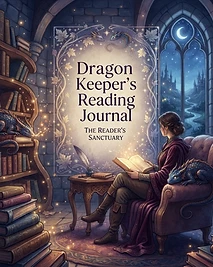
Reader's Sanctuary · Reading journal
Dragon Keeper's Reading Journal
An enchanting printable companion for your romantasy journey, designed to track series, annotate favorite tropes, and preserve the magic of every story.

 Featured
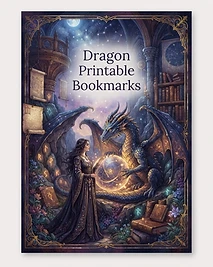
Dragon Treasury · Bookmarks
Dragon Printable Bookmarks
An enchanting collection of eight original dragon themed printable bookmarks designed to accompany your deepest fantasy reading sessions.

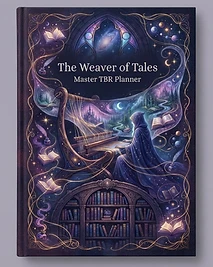
Reader's Sanctuary · Reading planner
Ultimate TBR Organizer
A poetic and practical sanctuary for the ambitious reader to map out their journey through endless worlds.
Original digital products, delivered instantly after payment. Sponsor and affiliate recommendations appear in their own labeled sections.