Mythical Legendary Creatures in Fantasy Books: The Complete Guide
The mythical legendary creatures that appear most frequently across fantasy literature include dragons, unicorns, griffins, phoenixes, merfolk, and faerie spirits. Writers rely on…

Some links on this page are affiliate links. As an Amazon Associate, Auravyre earns from qualifying purchases. This comes at no additional cost to you. Read the full disclosure.
The mythical legendary creatures that appear most frequently across fantasy literature include dragons, unicorns, griffins, phoenixes, merfolk, and faerie spirits. Writers rely on these beings to test mortal heroes, establish dangerous magical ecosystems, and personify primeval forces like renewal, predatory wilderness, or ancient wisdom. Whether swooping overhead as colossal fire-breathers or haunting coastal shallows as predatory sirens, these beasts form the structural backbone of speculative worldbuilding.
The Apex Beasts: Dragons, Wyverns, and Hoard Wardens
No creature commands fantasy literature quite like the dragon. Rooted in ancient world mythologies spanning European heraldry and Eastern cosmology, dragons serve as living cataclysms, divine arbiters, or sentient companions. In classical Western narratives, dragons typically appear as titanic reptilian monsters possessing bat-like wings, scaled armor, and fiery breath. Writers like J.R.R. Tolkien established Smaug as the archetype of the avaricious hoard warden, an ancient intelligence obsessed with gold, riddles, and absolute destruction. In contemporary romantasy and military fantasy, authors have shifted this dynamic toward mental bonds, telepathic partnerships, and fierce loyalty, as seen in popular titles explored across our list of books like Fourth Wing and ACOTAR. Readers frequently encounter wyverns alongside traditional dragons, though fantasy anatomy maintains clear distinctions between the two. Traditional dragons possess four legs and two distinct wings, giving them a broad, terrestrial posture when grounded. Wyverns possess only two hind legs, using the jointed elbows of their wings as forelimbs to crawl across crags and mountain summits. In books, wyverns often appear as vicious, feral mounts or swarming territorial hunters, lacking the ancient speech and spellcasting talents frequently granted to true dragons. Hoard wardens extend beyond mere reptiles, occasionally taking the shape of drakes or lindworms, wingless serpentine beasts that slither through deep subterranean tunnels to crush interlopers in their coils.
For building the same atmosphere at home, Romantasy Dark Academia Dragons Book Sleeve is worth a look.
Noble and Benevolent Beings: Unicorns, Phoenixes, and Griffins
While fire-drakes threaten kingdoms, benevolent legendary beasts embody preservation, untamable dignity, and miraculous renewal. The unicorn stands as one of literature's oldest heraldic figures, a graceful equine bearing a single spiral horn projecting from its brow. Medieval bestiaries framed the unicorn as an uncatchable beast drawn only to purity, while modern fantasy novels treat unicorn horns and blood as rare magical reagents capable of reversing deadly poisons or extending frail mortal lives. Phoenixes mirror this radiant nobility within the sphere of aerial myth. The phoenix is a sacred firebird of golden-crimson plumage that bursts into incandescent flames upon reaching the end of its life, only to re-emerge whole, youthful, and vibrant from its own cooling ashes. Fantasy authors use the phoenix to represent resurrection, endurance, and cyclical cosmic balance. When a protagonist aligns with a phoenix, it signals that defeat is never permanent, and that spiritual power outlasts physical death. Griffins balance fierce avian majesty with predatory mammalian power. A classical griffin merges the head, forelegs, and feathered wings of a giant eagle with the hindquarters, flanks, and tail of a lion. In fantasy literature, griffins frequently guard royal bloodlines, mountain sanctuaries, or lost caches of ancient knowledge. Unlike dragons, which hoard treasure out of covetous greed, griffins protect ancestral territory and sacred relics with unyielding loyalty. A related hybrid beast, the hippogriff, crosses an eagle with a horse, trading predatory ferocity for aerodynamic loyalty and swift transport through tempestuous skies.

Denizens of the Deep: Merfolk, Sirens, and the Kelpie
Bodies of water in fantasy literature hide treacherous threats and enchanting wonders alike, populated by mythical sea creatures that balance human allure with cold-blooded oceanic instinct. Mermaids and mermen, beings with the upper torso of a human and the scaled tail of a fish, appear in folklore worldwide. In modern maritime books, authors split merfolk into distinct narrative categories. Some depict them as shimmering, benevolent ambassadors of deep oceanic kingdoms, while others portray them as predatory sirens lurking on jagged sea stacks, singing hypnotic melodies that overwhelm the senses of sailors to run ships aground against splintering rocks. Fresh inland waters hold even darker terrors. Scottish folklore provides fantasy authors with the kelpie, a shapeshifting water demon that commonly assumes the form of a dripping, snow-white or coal-black horse standing patiently along riverbanks. When an exhausted wanderer climbs onto its back, the kelpie's skin becomes impossibly adhesive, trapping the rider before plunging down into the riverbed to drown them. Modern fantasy authors frequently invoke kelpies in dark fantasy and folklore-heavy romances to remind mortals that wilderness waters operate on cruel, primeval rules. Beyond coastal waters, oceanic epics feature gargantuan krakens and sea serpents capable of pulling entire warships beneath crashing swells, serving as reminders that humanity rarely controls the deep oceans.

Scary Mythical Creatures and Dark Harbingers: Banshees, Minotaurs, and Chimeras
When authors want to instill dread, they draw upon scary mythical creatures whose appearances signal misfortune, madness, or slaughter. The banshee originates in Celtic folklore as a wandering female spirit whose bone-chilling, mournful wail pierces the night air to foretell the imminent death of a family member. In horror-infused fantasy novels, banshees become lethal acoustic weapons, able to shatter minds, curse ancestral homes, or liquefy stone with their keening cries. Underground labyrinths and dark ruins host the minotaur, a hulking hybrid with the muscular body of a man and the horned head of a feral bull. Born of Greek myth, the minotaur represents primal savagery trapped in artificial mazes. Authors drop minotaurs into dungeon crawls and grimdark sagas as living siege engines, punishing hubristic adventurers who stray into forgotten ruins. Even more chaotic is the chimera, a monstrous hybrid traditionally depicted with the head of a lion, the body of a goat, and the tail of a venomous serpent, breathing plumes of blistering fire. Chimeras in speculative fiction embody magical corruption and reckless alchemical experimentation, representing broken biological orders that threaten surrounding settlements.
Comparing Iconic Mythical Creatures in Fantasy Literature
Authors use legendary beasts to set specific emotional stakes and conflicts within their plots. Here is a direct comparison of how the most prominent mythical creatures function across modern books:
| Creature | Primary Mythic Origin | Physical Archetype | Common Literary Role |
|---|---|---|---|
| Dragon | Global / European / Asian Folklore | Scaled reptile, wings, fire or elemental breath | World apex predator, bonded war partner, hoard keeper |
| Phoenix | Greco-Roman & Egyptian Legend | Crimson and gold firebird, regenerative ash | Symbol of rebirth, magical healer, elemental ally |
| Griffin | Mesopotamian & Greek Myth | Eagle forequarters and wings, lion hindquarters | Stalwart territorial guardian, aerial scout, regal mount |
| Kelpie | Scottish Celtic Lore | Dripping black or white equine, aquatic shapeshifter | Ambush predator, cautionary folkloric hazard |
| Siren / Mermaid | Greek & European Folklore | Half-human torso, fish tail, hypnotic voice | Maritime temptress, oceanic diplomat, coastal predator |
| Kitsune | Japanese Folklore | Multi-tailed fox, illusion magic, shapeshifting | Clever trickster, romantic familiar, spirit guide |
Fae, Tricksters, and Cute Mythical Familiars
Not every creature in fantasy literature seeks to incinerate armies or drown mariners. Many of the most enduring beasts belong to the realm of cute mythical creatures, mischievous familiars, and capricious tricksters. Small household spirits like brownies and hobgoblins emerge from British folklore, quietly mending tools, sweeping hearths, and watching over cottages in exchange for bowls of sweet cream, punishing lazy or ungrateful hosts with small bouts of domestic havoc. Japanese folklore introduces the kitsune, an intelligent multi-tailed fox that gains wisdom, magical potency, and additional tails as it ages. In modern urban fantasy and romantasy, kitsune frequently appear as silver-tongued familiars capable of projecting intricate illusions, shifting into human forms, and stealing the hearts of unsuspecting protagonists. For readers captivated by whimsical courts and tricky fae politics, exploring faerie books for adults provides an intimate look at how these folkloric sprites trade sweet promises for dangerous bargains. Familiars serve an essential role in storytelling, offering authors a voice to comment on human foolishness and provide gentle levity when dark plots grow suffocating. Pocket dragons, miniature gryphons, and winged felines bring warmth to the darkest journeys, proving that loyalty and wonder in fantasy need not always come with colossal scale.
If you want to bring a little of that into your own reading space, Quicksilver: Fae & Alchemy, 1 by Callie Hart sits in The Dragon's Hoard.
Readers who like to keep that feeling nearby tend to enjoy Spark of the Everflame: A Novel.
Common questions
What is the most common mythical creature in fantasy books?
Dragons are the most ubiquitous mythical creatures in fantasy literature, appearing as ancient hoard guardians, bonded military partners, and terrifying apex predators across both epic high fantasy and modern romantasy.
What is the difference between a wyvern and a dragon in literature?
In traditional fantasy anatomy, a true dragon possesses four legs and two independent wings, alongside high intelligence or magical speech. A wyvern has only two hind legs, using the elbow joints of its wings as forelimbs, and is usually portrayed as more animalistic and feral.
What are common scary mythical creatures in dark fantasy?
Dark fantasy frequently features predatory spirits like banshees, sirens, and kelpies, alongside grotesque hybrids such as chimeras and minotaurs to create dread and emphasize the lethality of the wild world.
Whether you love colossal hoard wardens or charming familiars that fit inside a traveler's pocket, exploring mythical legendary creatures reveals the hopes, fears, and ancient storytelling traditions that keep readers turning pages through the night.
Discover More Treasures
More from the Bookish Shop, chosen to match this chronicle.

Spark of the Everflame: A Novel
Penn Cole invites readers into a new realm with this first installment of The Kindred’s Curse Saga. Discover the beginning of a sweeping fantasy narrative.
Amazon

Romantasy Dark Academia Dragons Book Sleeve
Keep your paperback novels safe with this dragon-themed book sleeve. It is a thoughtful gift for readers who enjoy dark academia and fantasy literature.
Amazon

Quicksilver: Fae & Alchemy, 1 by Callie Hart
The opening volume in the Fae & Alchemy series by Callie Hart. This title marks the first entry in a fantasy saga.
Amazon
Continue Exploring The Chronicles

Griffin Mythology: Origins, Legends, and the Lore of the Winged Beast
In classical folklore and ancient legend, griffin mythology centers on a fearsome hybrid beast possessing the muscular body, hindquarters, and tail of a lion joined with the head,…

Does Cassian Die in ACOTAR? Survival Status and Near-Death Moments Explained
No, Cassian does not die in ACOTAR. The beloved Illyrian general survives every battle across the series so far, including the brutal climaxes of both A Court of Wings and Ruin…
What Is A Court of Thorns and Roses About? A Spoiler-Free Guide to ACOTAR
A Court of Thorns and Roses is a romantic fantasy series following Feyre Archeron, a nineteen-year-old human huntress who kills a faerie wolf to keep her family from starving and…
Digital downloads · The Dragon's Hoard
A reading companion for this story
Original journals, trackers, and printable treasures from The Dragon's Hoard.
Optional. Everything you use here stays free.

 Featured
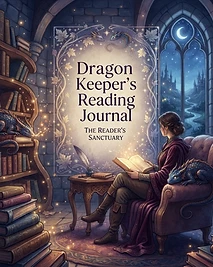
Reader's Sanctuary · Reading journal
Dragon Keeper's Reading Journal
An enchanting printable companion for your romantasy journey, designed to track series, annotate favorite tropes, and preserve the magic of every story.

 Featured
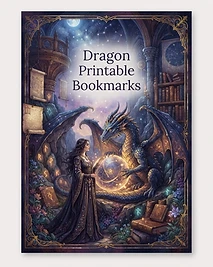
Dragon Treasury · Bookmarks
Dragon Printable Bookmarks
An enchanting collection of eight original dragon themed printable bookmarks designed to accompany your deepest fantasy reading sessions.

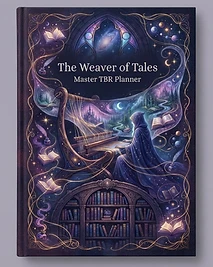
Reader's Sanctuary · Reading planner
Ultimate TBR Organizer
A poetic and practical sanctuary for the ambitious reader to map out their journey through endless worlds.
Original digital products, delivered instantly after payment. Sponsor and affiliate recommendations appear in their own labeled sections.